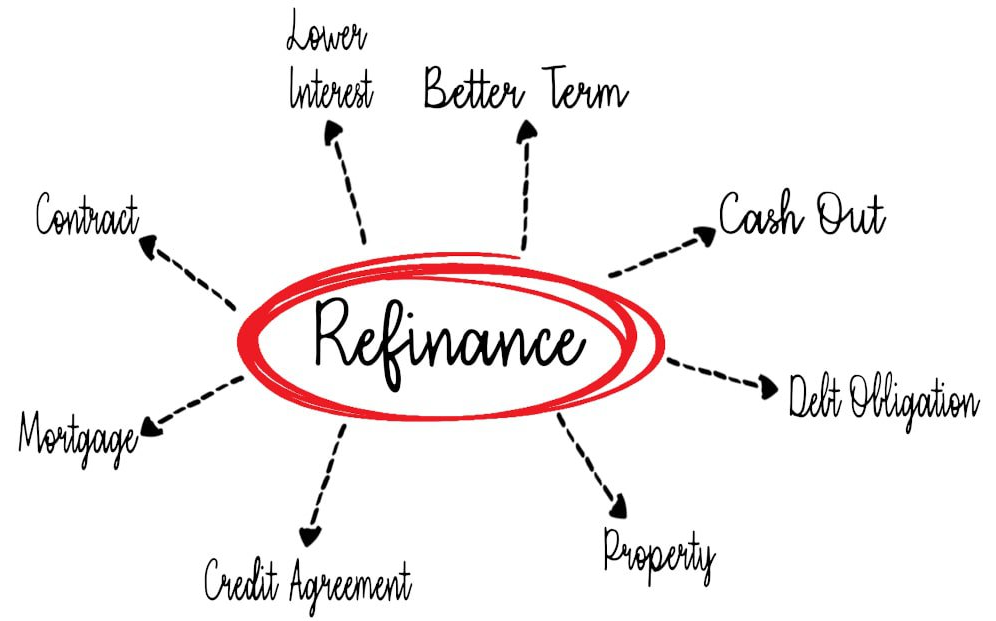
Homeowners across the United States are increasingly searching for smarter ways to manage debt, fund renovations, and improve financial flexibility. One of the most powerful financing strategies available today is the cash out refinance mortgage. If you have built equity in your property, this option may allow you to unlock cash while potentially securing better loan terms.
In this complete guide, we will cover everything about Cash Out Refinance Mortgage Explained, including how it works, eligibility requirements, pros and cons, interest rates, risks, tax considerations, and how to choose the best lender. Whether you are planning home improvements, consolidating high-interest debt, or financing major life expenses, understanding the cash out refinance process can help you make a better financial decision.
Cash Out Refinance Mortgage Explained
A cash out refinance mortgage is a type of home loan that replaces your existing mortgage with a new, larger mortgage. The difference between the old loan balance and the new mortgage amount is paid to you in cash.
For example:
- Current mortgage balance: $180,000
- Home value: $350,000
- New refinance mortgage: $250,000
In this scenario, after paying off the original mortgage balance, you would receive approximately $70,000 in cash before fees and closing costs.
This financing strategy allows homeowners to access home equity without selling their property.
How Does a Cash Out Refinance Work?
To understand Cash Out Refinance Mortgage Explained, it is important to know how lenders calculate home equity.
Home Equity Formula
Home Equity=Property Value−Mortgage Balance\text{Home Equity} = \text{Property Value} – \text{Mortgage Balance}
The more equity you have in your home, the more cash you may qualify to receive.
Most lenders allow homeowners to borrow up to 80% of the home’s appraised value, although some programs may allow higher loan-to-value ratios.
Example Calculation
Maximum Loan Amount=0.80×Home Value\text{Maximum Loan Amount} = 0.80 \times \text{Home Value}
If your home is worth $400,000:
0.80×400,000=320,0000.80 \times 400{,}000 = 320{,}000
If your remaining mortgage balance is $200,000, you may qualify to receive approximately $120,000 minus fees.
Why Homeowners Choose Cash Out Refinancing
There are many reasons why homeowners consider this financing option. Below are the most common uses.
1. Debt Consolidation
High-interest debt such as:
- Credit cards
- Personal loans
- Medical bills
- Payday loans
can often be consolidated into one lower-interest mortgage payment.
This strategy may reduce monthly financial pressure and simplify budgeting.
2. Home Renovations
Many homeowners use cash out refinancing for:
- Kitchen remodeling
- Bathroom upgrades
- Roof replacement
- Solar installation
- Swimming pools
- Room additions
Home improvements may also increase property value over time.
3. Emergency Expenses
Unexpected financial situations happen, including:
- Medical emergencies
- Job loss
- Family support
- Legal expenses
A cash out refinance can provide access to large amounts of money when needed.
4. Investment Opportunities
Some borrowers use funds for:
- Rental properties
- Small business investments
- Stock market investing
- Education funding
However, investment-based refinancing carries additional financial risk.
Benefits of Cash Out Refinance Mortgage
Understanding the advantages is essential when learning about Cash Out Refinance Mortgage Explained.
Lower Interest Rates Compared to Credit Cards
Mortgage interest rates are generally lower than:
- Credit card APRs
- Personal loan rates
- Short-term financing
This can lead to substantial savings.
Access to Large Loan Amounts
Because your home acts as collateral, lenders may approve significantly larger amounts compared to unsecured loans.
Single Monthly Payment
Instead of multiple debt payments, borrowers combine obligations into one mortgage payment.
Potential Tax Benefits
In some situations, mortgage interest may be tax deductible if the funds are used for qualified home improvements.
Consult a tax professional for current tax regulations.
Improved Cash Flow
Lower monthly payments can help improve monthly budgeting and financial stability.
Risks and Disadvantages
Although refinancing offers benefits, there are important risks.
Your Home Is Collateral
If you fail to make payments, foreclosure is possible.
This is one of the biggest risks associated with refinancing.
Higher Total Interest Costs
Extending your mortgage term may reduce monthly payments but increase the total interest paid over time.
Closing Costs
Cash out refinance loans typically include:
- Appraisal fees
- Title insurance
- Origination fees
- Attorney fees
- Recording fees
Closing costs usually range between 2% and 6% of the loan amount.
Reduced Home Equity
Taking cash out decreases the ownership equity in your property.
This may affect future borrowing options.
Potentially Higher Interest Rates
Cash out refinance loans often carry slightly higher interest rates than traditional refinance loans because lenders consider them riskier.
Cash Out Refinance vs Home Equity Loan
Many homeowners compare refinancing with home equity loans.
Cash Out Refinance
- Replaces current mortgage
- One loan payment
- Often lower interest rates
- New loan terms
Home Equity Loan
- Second loan added to existing mortgage
- Separate monthly payment
- Fixed interest rate
- Keeps original mortgage unchanged
Cash Out Refinance vs HELOC
A HELOC (Home Equity Line of Credit) works differently.
HELOC Features
- Revolving credit line
- Borrow as needed
- Variable interest rates
- Flexible withdrawal period
Cash Out Refinance Features
- Lump sum payment
- Fixed repayment structure
- Predictable monthly payment
- Full mortgage replacement
Choosing between these options depends on financial goals and risk tolerance.
Eligibility Requirements
Lenders evaluate several factors before approving refinancing.
Credit Score
Most lenders prefer:
- 620 minimum score
- Higher scores for better rates
Excellent credit often leads to lower mortgage rates.
Debt-to-Income Ratio
Lenders compare your monthly debt to income.
Debt-to-Income Ratio=Monthly Debt PaymentsGross Monthly Income\text{Debt-to-Income Ratio} = \frac{\text{Monthly Debt Payments}}{\text{Gross Monthly Income}}
Lower debt ratios improve approval chances.
Home Equity
Most lenders require at least 20% equity remaining after refinancing.
Stable Income
Borrowers typically need:
- Employment verification
- Tax returns
- Bank statements
- W-2 forms
Self-employed borrowers may require additional documentation.
Best Time to Use Cash Out Refinancing
Refinancing may make sense when:
- Interest rates are lower
- Property values increase
- You need large funds
- High-interest debt becomes difficult to manage
- Renovations increase home value
It may not be ideal if you plan to move soon due to closing costs.
Types of Cash Out Refinance Loans
Several refinance loan programs exist.
Conventional Cash Out Refinance
Popular among borrowers with strong credit and stable income.
Features
- Competitive rates
- Flexible loan amounts
- Private mortgage insurance may apply
FHA Cash Out Refinance
Backed by the government and designed for borrowers with lower credit scores.
Benefits
- Easier qualification
- Lower down equity requirements
- Flexible underwriting
VA Cash Out Refinance
Available to eligible military service members and veterans.
Advantages
- Competitive rates
- No private mortgage insurance
- Flexible credit standards
Jumbo Cash Out Refinance
Used for high-value properties exceeding conforming loan limits.
These loans often require:
- Higher credit scores
- Larger reserves
- More documentation
Step-by-Step Cash Out Refinance Process
Understanding the process is important in this guide about Cash Out Refinance Mortgage Explained.
Step 1: Review Home Equity
Check estimated property value and remaining mortgage balance.
Step 2: Compare Mortgage Lenders
Research lenders carefully and compare:
- Interest rates
- APR
- Closing costs
- Customer reviews
- Loan terms
Step 3: Submit Application
Provide financial documents such as:
- Income verification
- Tax returns
- Credit authorization
- Bank statements
Step 4: Home Appraisal
Lenders order a property appraisal to determine market value.
Step 5: Underwriting
The lender reviews:
- Credit history
- Income
- Property value
- Debt obligations
Step 6: Loan Approval and Closing
Once approved:
- Old mortgage is paid off
- New mortgage is issued
- Remaining funds are provided to the borrower
Understanding Interest Rates
Mortgage rates depend on several factors.
Main Rate Factors
- Credit score
- Loan amount
- Home equity percentage
- Market conditions
- Loan type
- Property occupancy
Borrowers with strong financial profiles usually qualify for lower rates.
Fixed vs Adjustable Rate Refinancing
Fixed Rate Mortgage
- Stable interest rate
- Predictable payments
- Long-term security
Best for borrowers planning long-term ownership.
Adjustable Rate Mortgage (ARM)
- Lower initial rate
- Rate changes over time
- Potential payment increases
Best for short-term homeowners or strategic refinancing.
Common Mistakes to Avoid
Many homeowners make costly refinancing mistakes.
Borrowing Too Much
Avoid using home equity for unnecessary luxury spending.
Ignoring Total Loan Costs
Always compare:
- APR
- Interest costs
- Closing fees
- Loan duration
Not Shopping Around
Different lenders offer dramatically different rates and fees.
Comparing multiple offers can save thousands of dollars.
Extending the Loan Excessively
A lower monthly payment may increase lifetime interest costs.
Refinancing Too Frequently
Repeated refinancing can accumulate significant fees.
Tax Considerations
Tax laws frequently change, but mortgage interest deductions may apply in certain cases.
Generally, interest may be deductible if refinance funds are used for:
- Home improvements
- Property upgrades
- Structural renovations
Using funds for personal expenses may reduce deductibility.
Always consult a qualified tax advisor.
Cash Out Refinance for Debt Consolidation
Debt consolidation is one of the most common refinance goals.
Example Scenario
Suppose a homeowner has:
- $25,000 credit card debt at 24% APR
- $15,000 personal loan at 15% APR
Refinancing into a mortgage rate below those amounts may reduce overall monthly payments substantially.
However, converting unsecured debt into secured debt increases foreclosure risk.
Cash Out Refinance for Investment Property
Investment property refinancing usually includes:
- Higher interest rates
- Stricter requirements
- Larger equity requirements
Lenders often view rental properties as higher risk.
How Much Cash Can You Get?
The amount depends on:
- Property value
- Existing mortgage balance
- Loan-to-value ratio
- Creditworthiness
Loan-to-Value Formula
Loan-to-Value Ratio=Mortgage AmountProperty Value\text{Loan-to-Value Ratio} = \frac{\text{Mortgage Amount}}{\text{Property Value}}
Most lenders cap LTV ratios around 80%.
Is Cash Out Refinancing Worth It?
The answer depends on financial goals.
It may be worth considering if:
- You can reduce high-interest debt
- You need renovation financing
- Mortgage rates remain competitive
- Long-term savings outweigh closing costs
It may not be ideal if:
- You plan to move soon
- Your equity is limited
- You struggle with budgeting
- Monthly payments become unaffordable
Tips for Getting the Best Cash Out Refinance Rates
Improve Credit Score
Pay down debts and avoid late payments before applying.
Lower Debt Ratios
Reducing monthly obligations can improve approval odds.
Increase Property Value
Minor renovations may improve appraisal results.
Compare Multiple Lenders
Always obtain quotes from several lenders before choosing one.
Consider Shorter Loan Terms
Shorter loans may have lower interest rates and reduced lifetime costs.
Frequently Asked Questions
Is cash out refinance risky?
Yes. Your home becomes collateral, meaning missed payments may result in foreclosure.
Can I refinance with bad credit?
Some lenders offer programs for lower credit borrowers, especially FHA refinance options.
How long does refinancing take?
Most refinance transactions take between 30 and 45 days.
Do I need an appraisal?
Usually yes. Most lenders require a professional home appraisal.
Can I use funds for anything?
Generally yes, although some uses may affect tax deductibility.
Future Trends in Mortgage Refinancing
Mortgage technology continues evolving rapidly.
Modern lenders increasingly offer:
- AI-powered approvals
- Digital mortgage processing
- Faster underwriting
- Online verification systems
- Automated appraisals
Competition among lenders may continue improving borrower options in 2026 and beyond.
Final Thoughts on Cash Out Refinance Mortgage Explained
Understanding Cash Out Refinance Mortgage Explained is essential before using home equity as a financial tool. While refinancing can provide substantial cash access, debt consolidation opportunities, and home improvement funding, it also carries significant financial responsibility.
Homeowners should carefully evaluate:
- Interest rates
- Closing costs
- Monthly affordability
- Long-term financial goals
- Property equity levels
A well-planned refinance strategy can improve financial flexibility and potentially reduce expensive debt. However, poor planning may increase financial risk and reduce long-term wealth.
Before proceeding, compare lenders carefully, review loan estimates thoroughly, and consult qualified mortgage or financial professionals when necessary.
By making informed decisions, homeowners can maximize the benefits of refinancing while minimizing unnecessary risks.